Archive 2026
Database Query
| News list 2026 |
|---|
Ig Nobel Prize for Buried Underpants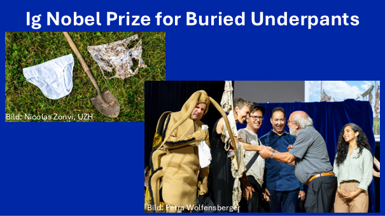 Researchers from the University of Zurich and Agroscope received one of the coveted Ig Nobel Prizes 2026 with their citizen science project "Proof by Underpants". The degree of underpants decomposition serves as an indicator of soil activity. In this way the project excellently fits the criteria of the Ig Nobel Prize: Science "that first makes people laugh, and then makes them think". Mehr 2026-09-04 MNF Communication |
First Hint of Dark Matter The LUX-ZEPLIN experiment has delivered a small but compelling hint of dark matter. UZH researchers are playing a key role in capturing and analyzing these data. Mehr 2026-09-01 |
First Measurement of Low-Energy Solar Neutrinos Scattering Off Electrons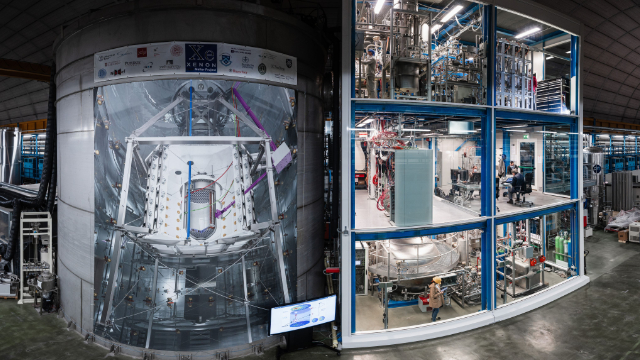 Researchers have observed low-energy solar neutrinos scattering off electrons in the XENONnT detector. The University of Zurich is involved in the experiment. Mehr 2026-08-31 |
The Biggest Ever Scientifica How do we create new knowledge? Over the course of a week, Scientifica will explore this question at events in and around Zurich. The collaborative UZH and ETH science festival offers an ideal platform for introducing the wider public to the latest research projects. Mehr 2026-08-14 |
Characteristic changes in the pancreas in the earliest stages of type 1 diabetes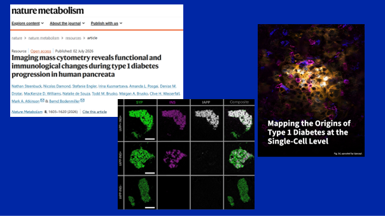 A unique dataset comprising 16 million single cells from 88 human pancreatic tissue samples generated by imaging mass cytometry provides new evidence of characteristic changes in the earliest stages of type 1 diabetes —before substantial loss of beta cells and insulin production occurs. Mehr 2026-08-07 Bernd Bodenmiller |
Human Activity More than Doubles Fire Occurrence in the Arctic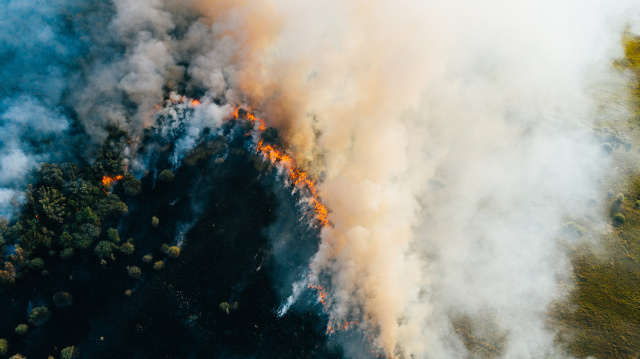 In the Arctic, fires occurred 2.5 times more often in lit areas associated with human activity than in climatically similar unlit areas. Effective fire prevention and response can help reduce risks whose impacts extend far beyond the Arctic. Mehr 2026-08-04 |
Newly discovered protein conformation offers a potential target for cancer drugs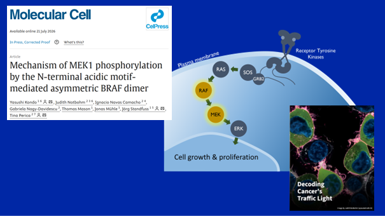 Several types of cancer are triggered by mutations in a protein called BRAF. Researchers at the University of Zürich (UZH) and the Paul Scherrer Institute PSI have published a study in the journal Molecular Cell, that opens new avenues for cancer treatment. Mehr 2026-07-24 Tina Perica |
Young Scientists Answer Key Questions about Animal Research In the video series “Animal Research in Switzerland” 14 researchers—most of them young—answer the public’s most pressing questions. Mehr 2026-07-08 Interview: Kurt Bodenmüller |
Polyploidy—A Path to Greater Adaptation to Changing Environmental Conditions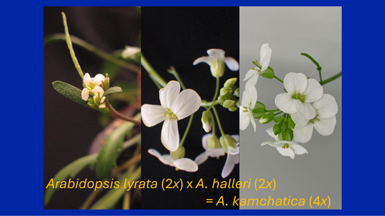 Polyploidization is a key evolutionary force generating further diversity. With their study, researchers at UZH together with colleagues from the USA and Japan closed a long-standing knowledge gap by investigating which epigenetic and transcriptomic responses occurring immediately after polyploidization are crucial for successful speciation. Mehr 2026-07-07 Rie Shimizu-Inatsugi |
Amazon’s Biocultural Heritage Under Greater Threat Than Expected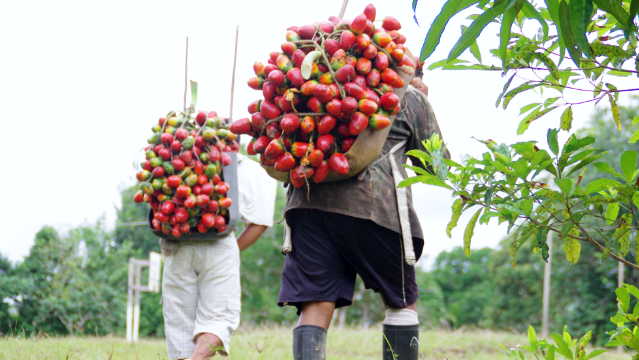 Indigenous cultures in the Amazon region will lose up to one-third of the native plant species they use due to climate change. In addition, biocultural knowledge is set to decline sharply by 2080 as a result of the loss of Indigenous languages. These are the findings of a new study by the University of Zurich. Mehr 2026-07-07 |
The Vera C. Rubin Observatory starts 10 year cosmic survey The 10-year Legacy Survey of Space and Time has officially started, marking the beginning of a new era in astronomy and astrophysics (more). At the Physik-Institut UZH the group of Marcelle Soares Santos contributed to commissioning of the LSST camera on the telescope, data taking and data analysis. Mehr 2026-07-06 Marcelle Soares Santos |
Record-Breaking Magnet Decodes Complex Molecules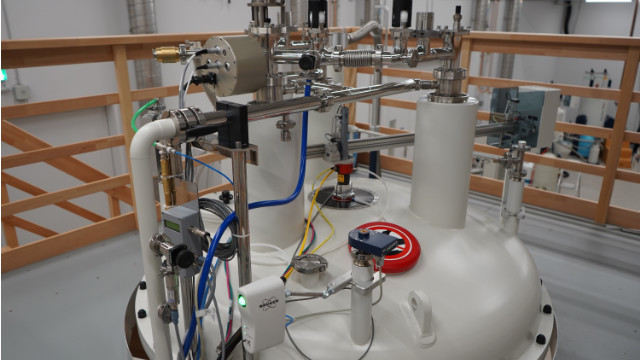 UZH operates one of the world's most powerful nuclear magnetic resonance spectrometers for research on complex biological molecules. Mehr 2026-06-29 Norbert Raabe; translated by Jane Catterall |
Environmental DNA Reveals Impact of Climate and Humans on Global River Fish Biodiversity Human activity and climate influence biodiversity patterns in river ecosystems, as a global analysis of fish biodiversity using environmental DNA (eDNA) reveals. Mehr 2026-06-23 |
Wie viel verraten digitale Daten über unsere Städte? Wir haben mehr Daten über unsere Städte als je zuvor. Und dennoch bleiben wichtige Fragen offen, die wir nicht aus den Augen verlieren sollten. Mehr 2026-06-15 Esra Suel, DSI-Professorin |
New NCCR Muoniverse takes off Muoniverse began operations in May as one of six newly funded National Centres of Competence in Research (NCCRs). The center quickly gathered momentum in its first weeks: recruiting PhD students and postdoctoral researchers, setting up a coordination office, appointing board members, holding a kick-off meeting, and launching the research projects at the heart of its program. Mehr 2026-06-09 Aleksandra Nelson |
«Biodiversität ist die Grundlage für Wirtschaft und Wohlstand» Am 4. World Biodiversity Forum in Davos trifft sich die internationale Biodiversitätswissenschaft mit Teilnehmenden aus Politik, Wirtschaft, Gesellschaft und Kultur zum Schutz der Biodiversität. Mehr 2026-06-08 Kurt Bodenmüller, Medienbeauftragter |
Microrobots repair spinal cord in zebrafish and mice Researchers at MNF of UZH and ETH Zürich developed biohybrid microrobots that accelerate spinal cord repair. In zebrafish larvae, the treatment rapidly restored normal swimming behaviour, with similar regenerative effects also observed in mice. Mehr 2026-06-05 Stephan Neuhauss; Jingjing Zang |
Decades for Science There are only a handful of professors as successful as Prof. Dr. Andreas Plückthun – both throughout his career and beyond. A good reason to celebrate! Mehr 2026-06-05 Communications |
Under Monitoring: Glaciers worldwide - The MNF in the highlight movie of the Dies academicus Every year, UZH marks its anniversary. The university receives congratulations, honors outstanding individuals, awards honorary doctorates, and presents a highlight video showcasing its diverse research. In 2025, the Faculty of Science focuses on glacier monitoring, aligned with the International Year of Glaciers’ Preservation. Mehr 2026-06-02 Kommunikation MNF |
Paving the Way for Dialogue Exchanging views and engaging in dialogue are a crucial part of the University of Zurich. In a series employees are introduced who help ensure campus life continues to thrive and who encourage dialogue between the university and society. Mehr 2026-06-02 Communications |
ESA Mission to Explore Understory Biodiversity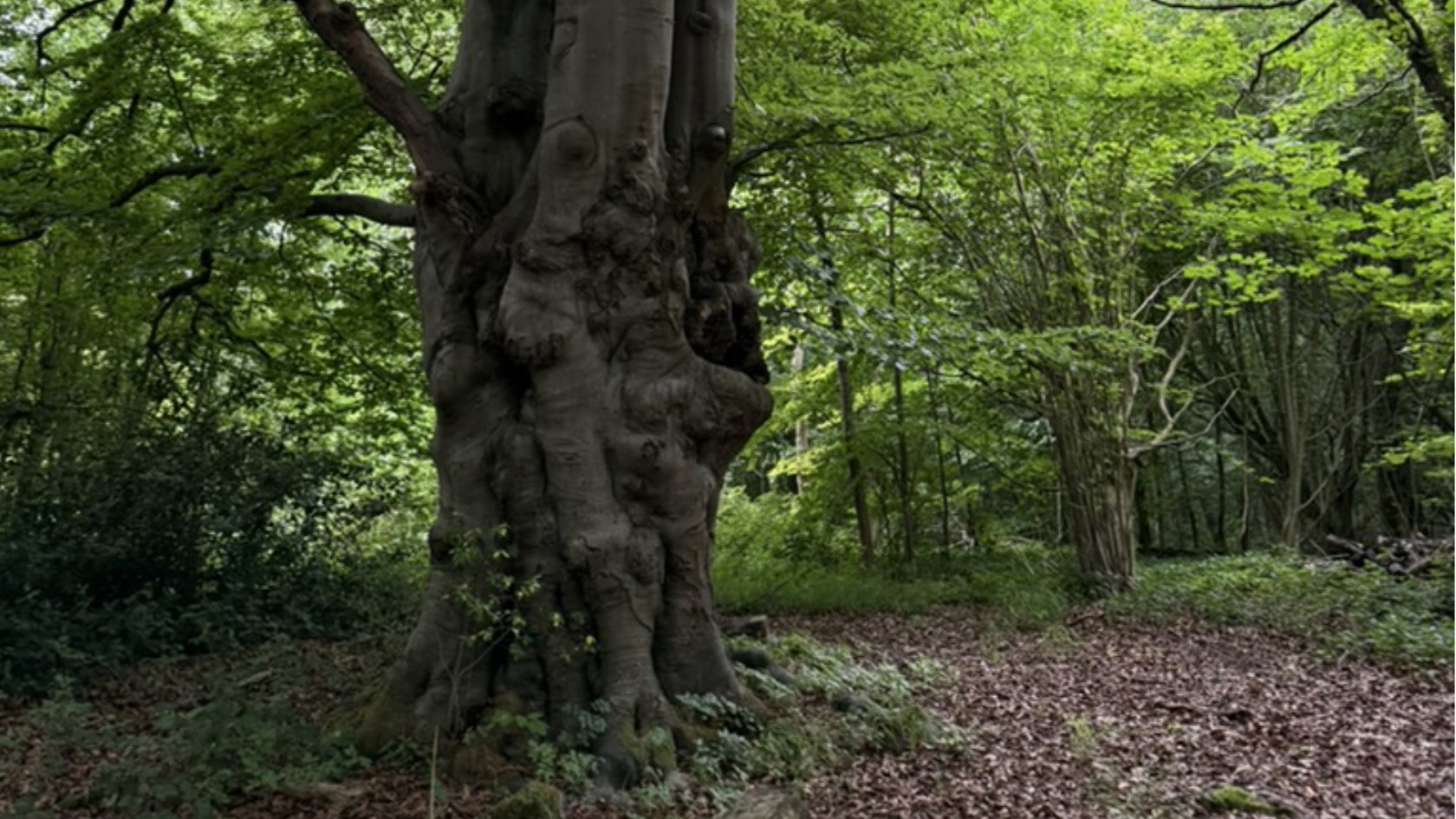 The HiBiDiS mission aims to provide new insights into forest biodiversity, answering key questions about climate change. UZH is participating as a scientific partner. Mehr 2026-05-26 UZH Kommunikation |
Haploid UV sex chromosomes of plants are not boring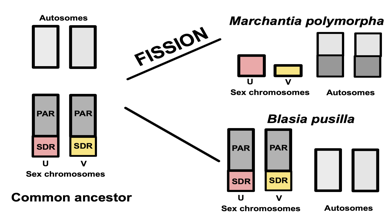 Initially, sex chromosomes are expected to be similar in size and appearance (homomorphic), but they may diverge over time (heteromorphic). Yet, homomorphic sex chromosomes are only well-characterized in diploid flowering plants whereas their structure and evolutionary history is underexplored in the haploid-dominant group of plants, the bryophytes. UZH researchers now tackled this issue. Mehr 2026-05-18 Peter Szovenyi |
Riesenbromelie blüht zum einzigen Mal in ihrem Leben Im Botanischen Garten Zürich ist derzeit ein seltenes Naturschauspiel zu sehen: Die imposante Riesenbromelie Alcantarea imperialis blüht. Mehr 2026-05-04 Botanischer Garten Zürich |
Mit Zahlen spielen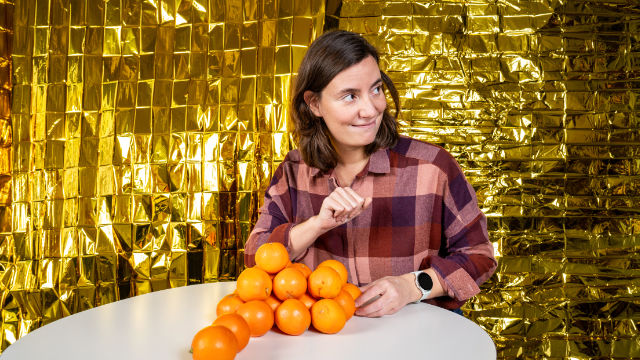 Mit der Magie der natürlichen Zahlen beschäftigt sich die Zahlentheorie. Darauf hat sich die Mathematikerin Claire Burrin spezialisiert. Mehr 2026-05-03 Santina Russo |
How parabolic flights in zero gravity deepen our understanding of planet formation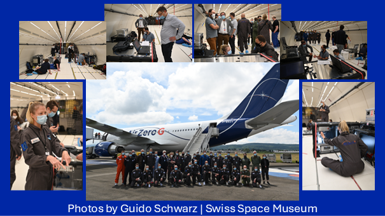 During parabolic flights in zero gravity the first experimental evidence was obtained that a key physical process, known as shear-flow instability, occurs under conditions similar to those in planet formation regions. A research team led by the University of Bern, with participation of ETH Zurich, UZH and NCCR PlanetS conducted this research. Mehr 2026-04-27 Lucio Mayer |
Equality by Design The Faculty of Science is applying for an international label for equality, diversity, and inclusion – the first faculty in Switzerland to do so. Mehr 2026-04-16 Brigitte Blöchlinger and Barbara Simpson |
Spotlight on climate in Switzerland 2026 Where does Switzerland stand in addressing climate change? The latest report from the Swiss Academies of Sciences (SCNAT) provides an answer to this question. It also assesses future risks associated with climate change and presents a wide range of scientifically proven, effective options for climate protection and adaptation. Mehr 2026-04-13 Christian Huggel |
How Soil Microbes Adapt to Life in Lakes In order to successfully to colonize new habitats, some microbes acquire new traits, but others reduce the size of their genome and lose some functions, as the genomes of bacteria in Lake Zurich show. Mehr 2026-04-13 |
Collecting Data for NASA UZH provides NASA with flight data from the Orion space capsule to test the possibility of involving external parties in monitoring flight paths. Mehr 2026-04-01 Theo von Däniken |
Climate change affects the landscape: practical knowledge from experience and research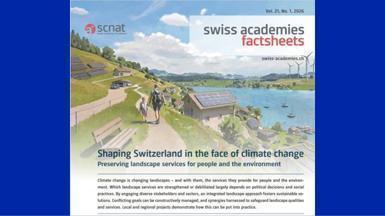 From droughts to heavy rainfall and retreating glaciers – climate change is altering Switzerland's landscapes. At the same time these landscapes protect us from the consequences of climate change, such as flooding and avalanches. How can we safeguard these landscape services in the future? Mehr 2026-03-27 Dr. Roger Keller |
Radiotracer x Apple Vision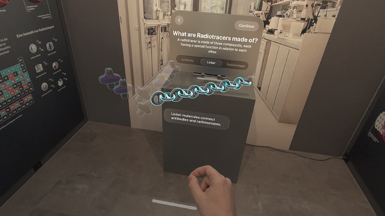 The Radiotracer app, which allows users to build their own radiotracers, is now also available for Apple Vision Pro. Mehr 2026-03-17 Ilaria Brunetti |
Researching on Equal Terms in the Amazon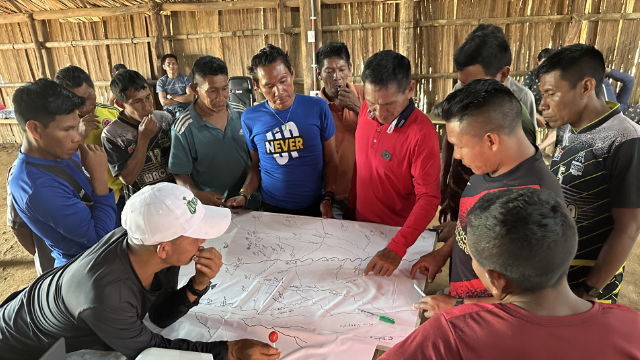 Two researchers have discovered a new palm species in the virgin forests of Colombia. Together with an indigenous community, they mapped its geographical distribution. Mehr 2026-03-17 Melanie Nyfeler |
How AI Can Learn Better Today’s artificial intelligence (AI) systems have difficulty understanding complex relationships. Benjamin Grewe wants to change this and draws his inspiration from biology. Mehr 2026-03-11 Interview: Roger Nickl; Translation: Meg Züblin |
Global Warming Causes Cropland Areas to Shrink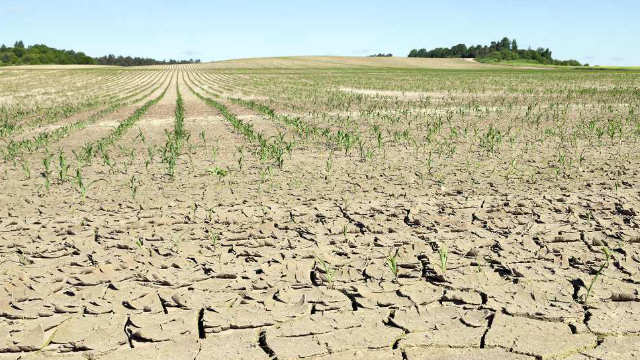 The subtropics are particularly affected. Explore animated diagrams and interactive maps that show the extent of the decline in various climate scenarios. Mehr 2026-02-25 Text: Theo von Däniken / Translation: Michael Jackson |
Ausbruch aus der Quantenwelt Ein Escape-Room zur Quantenphysik? Was abenteuerlich klingt, bringt im Science Pavilion UZH Besuchenden die Physik auf unterhaltsame Weise näher. Mehr 2026-02-18 Theo von Däniken, UZH News |
Bug-Born Breakthrough Oliver Zerbe is working on an active substance that attacks pathogenic bacteria in a novel way and eliminates them. Mehr 2026-02-16 Adrian Ritter |
Climate change in mountains has far-reaching impacts downstream Mountains are the world’s “water towers” and disproportionally affected by climate change. Substantial research focuses on snow and glacier changes within mountains. A comprehensive perspective published in Nature Climate Change now highlights the cascading downstream effects on water supply, ecosystems and human activities – and shows that decisions downstream can feed back to the mountains. Mehr 2026-02-10 Daniel Viviroli |
SCNAT Report «Biodiversität in der Schweiz verstehen und gestalten» In the framework of the SCNAT Forum Biodiversity Switzerland, the state of biodiversity in Switzerland was assessed. The report “Understanding and Shaping Biodiversity in Switzerland» shows that the state of biodiversity in Switzerland remains insufficient, although there are also some positive developments. Mehr 2026-02-04 Florian Altermatt |
Pesticides Significantly Affect Soil Life and Biodiversity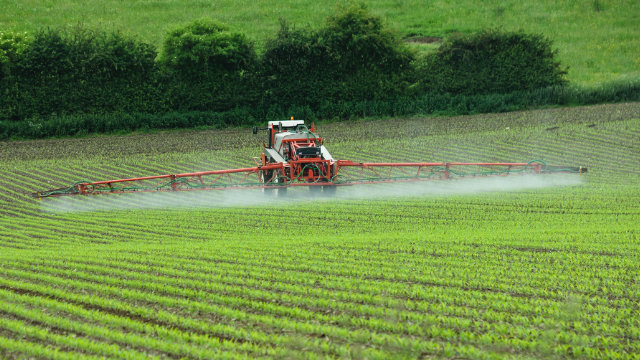 Seventy percent of soils in Europe are contaminated with pesticides. A Europe-wide study now shows that their effects on soil life are substantial, as pesticides suppress various beneficial soil organisms. Mehr 2026-01-27 |
Temporal changes in leaf fall have consequences for amphipods Aquatic ecosystems are fragile. But just how fragile they are has been revealed in a new study by the Swiss Federal Institute of Aquatic Science and Technology (Eawag) and UZH. Researchers investigated how climate change is affecting amphipods by shifting the timing of leaf fall in autumn. These creatures feed on leaves and, as the base of the food chain, have an impact on the entire ecosystem. Mehr 2026-01-25 Luke Ireland and Florian Altermatt |
Chiral surface states from 3D Landau bands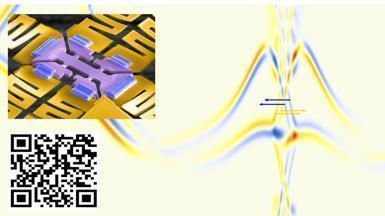 Importance of three-dimensional chiral surface states for transport in bismuth microstructures in a large magnetic field is reported in Nature Physics by Mark H Fischer and Titus Neupert of UZH in a collaboration with the group of Philip J.W. Moll (MPI Hamburg). Mehr 2026-01-20 Mark Fischer |
Einstein’s Dissertation: Groundbreaking Work in Physics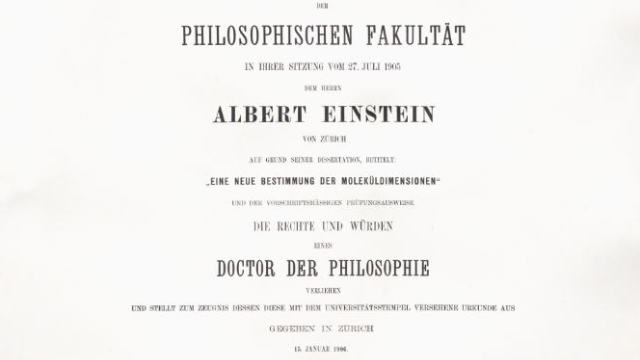 Exactly 120 years ago today, Albert Einstein was awarded his doctoral certificate at the University of Zurich (UZH). Test your knowledge of Einstein’s dissertation in our quiz. Mehr 2026-01-14 Roger Nickl, Theo von Däniken / Translation: Philip Isler |
How Wheat Fends Off Fungi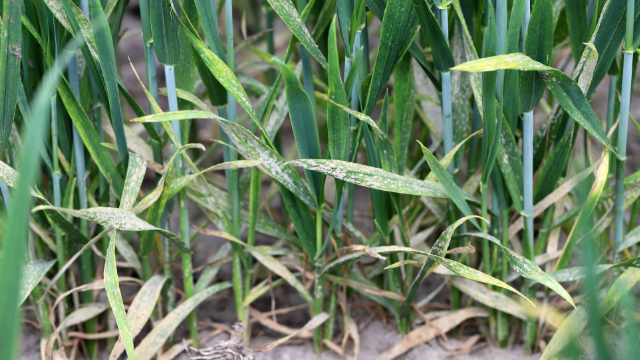 Although cereals naturally resist pathogenic fungi, powdery mildew can overcome this resistance. Researchers have now discovered one of the mechanisms behind this process. Mehr 2026-01-11 |
Ecological Insights from 30 Years of Forest Biodiversity Experiments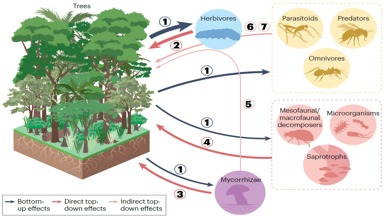 Widespread forest destruction and loss of tree species has raised concern about negative impacts on ecosystem services and human well-being. Forests are the most complex and species-rich terrestrial ecosystems and contribute more to global ecological processes such as carbon storage and climate buffering than any other ecosystem. Mehr 2026-01-05 Bernhard Schmid |
Database Query
| list of events 2026 |
|---|
OHI! One Health Interactive Seminar - Critical Care Across Species Interactive seminar series shining a spotlight on One Health research What can you expect? Renowned experts will present research questions or scenarios in a stimulating way, including complementary orcontrasting perspectives while actively involving the audience. Mehr 2026-08-28 Laura Tüshaus-Rudin |
OHI! One Health Interactive Seminar - Obesity: More Than a Personal Choice Interactive seminar series shining a spotlight on One Health research for curious non-experts and scientists alike. Renowned experts will present research questions or scenarios in a stimulating way, while actively involving the audience. Monday, 29 June 2026, 18:30-20:15 University main building, KOL-F-104, Rämistr. 71, 8006 Zürich Obesity: More Than a Personal Choice Mehr 2026-06-25 Laura Tüshaus-Rudin |
Polar night vom Swiss Polar Institute On 16 June 2026 the Polar night of the Swiss Polar Institute will take place on Irchel Campus. Among others, the film "Sumé" will be shown. Mehr 2026-06-05 |
Open Doors @ GIUZ, May 21, 2026 The Department of Geography will open its doors on Thursday, May 21, 2026, offering exciting insights into its research and teaching. It’s also a great opportunity to network and exchange ideas – with the department’s staff, alumns, teachers, partners, and anyone else interested. Mehr 2026-04-22 Magdalena Seebauer |
2nd Charles Weissmann Lecture on April 17, 2026 The Department of Molecular Life Sciences will host Nobel Prize winner Prof. Dr. Emmanuelle Charpentier on April 17, 2026 Mehr 2026-04-13 Damian Brunner |
Science Info Day - Meet the study programs of the Faculty of Science at Irchel Campus The Science Info Day of the Faculty of Science will take place on March 7, 2026! Get a taste of university life, take a look at lecture halls and laboratories, look into the future, ask students questions, and get answers to your questions—all this is possible, true to the motto: More aha! Less huh? Mehr 2026-03-02 Communications |